
The Who and The Kinks - just a different case
Pete Townsend and The Who was a different case. When they broke through with My Generation from their first album in 1965, they “displayed” a full scaled power rock anthem. Bass, drums and guitar backing lead singer, Roger Daltrey. The record was produced by Shel Talmy (1937-2024), who the year before also sat on the desk, when The Kinks had two major hits with You Really Got Me and All Day and All of the Night, three chord metal rock in its early phase
Sigurd Weise
2/18/20264 min read
The Who and The Kinks
Pete Townsend and The Who was a different case. When they broke through with My Generation from their first album in 1965, they “displayed” a full scaled power rock anthem. Bass, drums and guitar backing lead singer, Roger Daltrey. The record was produced by Shel Talmy (1937-2024), who the year before also sat on the desk, when The Kinks had two major hits with You Really Got Me and All Day and All of the Night, three chord metal rock in its early phase.
Nicky Hopkins - the keyboard connection/the session man
Both The Who and The Kinks hired the legendary piano man, Nicky Hopkins (1944-94) during the first years of their career. Hopkins contributed to the My Generation album, and in 1971 he played on Who´s Next, probably the best Who-album ever.Hopkins was also session man on the classic Kinks albums, The Kink Kontroversy, Face to Face, Something Else, and The Village Green Preservation Society, which later among fans has led to a fierce discussion about where Ray Davies or Nicky Hopkins should be credited:
He reads the dots and plays each line,
And always finishes on time.
No overtime nor favors done.
He is a session man,
A chord progression,
A top musician.
Ray Davies, Session Man from Face to Face (1966).
Nicky Hopkins most famous contribution as a studio musician is probably The Stones´ Sympathy for the Devil (1968) from Beggars Banquet, one of the Stones´ best albums. But Hopkins played on more than 250 albums, including The Beatles, Joe Cocker, Steve Miller Band, Quicksilver Messenger Service, George Harrison and John Lennon solo. Hopkins, classically trained an extremely talented, suffered from Crohn´s disease and did not manage the exhausting touring very well. Traveling with The Stones and the excesses, that followed, did no good for a man with a weak resilience. And at the end Hopkins did not get the profits from his work, that he deserved. The rock and roll business is not guided by charity or righteousness, but greed and cool cash.
Pete Townshend and the concept albums
The Who´s second album was a corporate project. All in the band contributed, though Townshend still was the main creative force. On the third album, The Who Sell Out 1967), Townsend wanted to create a concept album, satirical, funny and based on solid Who-pop. He succeeded, but in the US the album was totally ignored, just like The Kinks´ The Village Green Preservation Society, now their bestselling album. VGPS was released in 1968 and sold poorly, both in the UK and in the US.
Townshend and Davies seemed to ignore the fact, that concept albums in the first hand did not sell, but kept on pursuing their artistic ambitions. They were up against a market, that demanded Top Twenty hits, and hits that could sell a full LP without anything else than hollow imitations and trivialities to fill the rest of the 35 minutes on the LP. It must have been a tough job, if you were a one hit wonder and the inspirational source had dried out!
The Kinks - out of time, out of the US market
The Who managed to transform their ambitious albums into energetic, powerful stadium rock with immense success. The Kinks suffered the notorious, fatal nearly five years long ban from 1965-69, where the group couldn´t tour in the States, right in the midst of an extremely creative period. The ban probably damaged the Kinks final breakthrough as a major act on the essential, lucrative American market.
Sleepwalker (1977), Misfits (1978) and especially Low Budget (1979) paved the road to a new audience in the states. The Kinks had signed with Arista Records, and the legendary boss Clive Davis (1932- ) urged Ray Davies and The Kinks to return to more rock-oriented albums dropping the concepts. Misfits is still an album, where the songs stick together. But Clive Davis made The Kinks into a commercial success, and when I heard the band in Portland, Maine, in the summer of 1979, the crowd was enthusiastic and cheering both the classic hits from the Sixties but also the new material.
The Tommy-Tour
When The Who finished recording Tommy and released the double LP in May 1969, the band instantly toured with great success in the States. The more than one hour long concert in Woodstock on the 17th of August was a manifestation of the bands live quality. The ability to turn Townshend´s slightly premediated narrative of the boy, Tommy, (“deaf, dumb and blind”, after witnessing his father, a soldier returning after being missed for years, killing the new lover of his mother) is impressive. But Tommy is a novel, not a historical narrative. Quadrophenia (1973) is much more relevant in that sense.
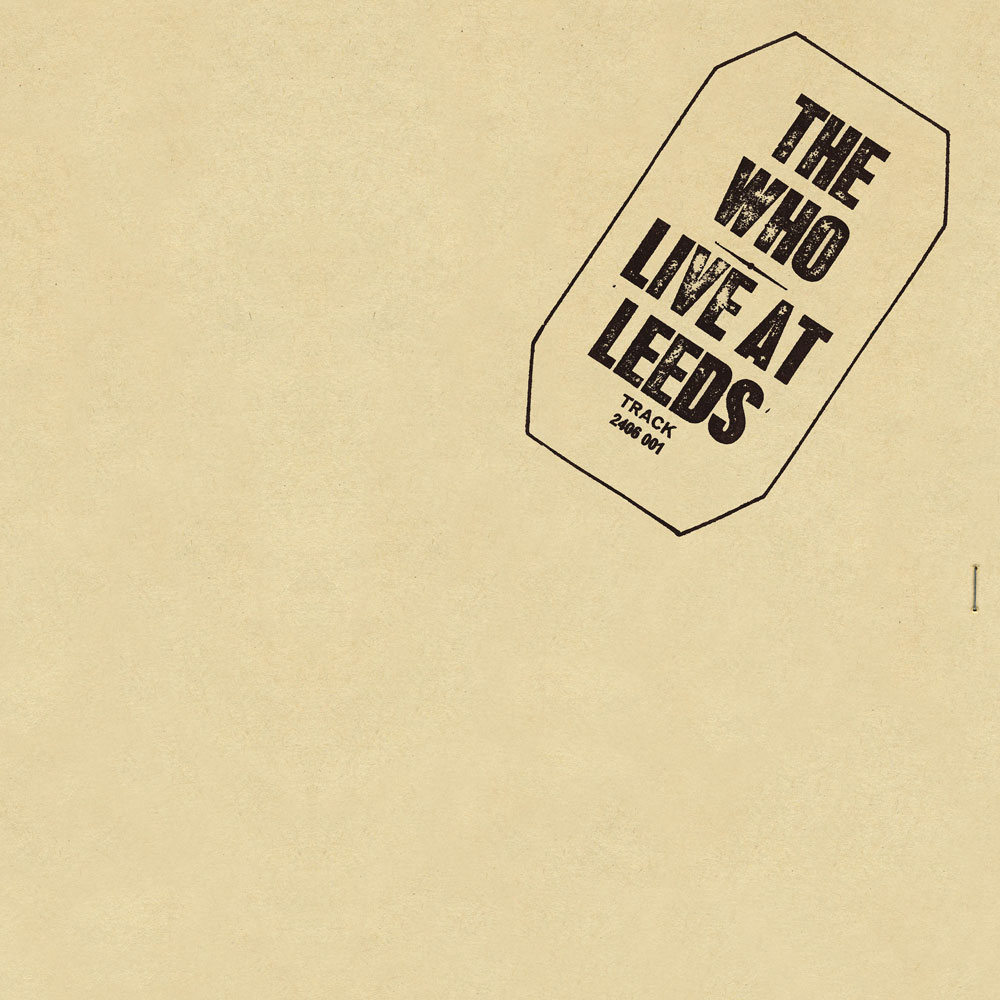
After Woodstock and the successful Tommy-Tour The Who strengthened their artistic and commercial progress with the phenomenal Live at Leeds, packed in a simple, brown paper cover, that was a reference to the many bootlegs, that followed the bands tours. This live recording was the key that really opened my ears for the frantic and still musically organized Englishmen. The year after followed the milestone Who´s Next.
The Who did not really have to do more to earn a place in The Rock & Roll Hall of Fame
The Kinks? They were totally stuck commercially, if you forget all about Lola (1970).
If you are among the unlucky ones, that never really listened to The Who, then go first for Live At Leeds and then check out: https://www.thewho.com/music/the-who-studio-albums/, where you also find both covers on this blog. Great www to meet The Who!
© 2025. All rights reserved.